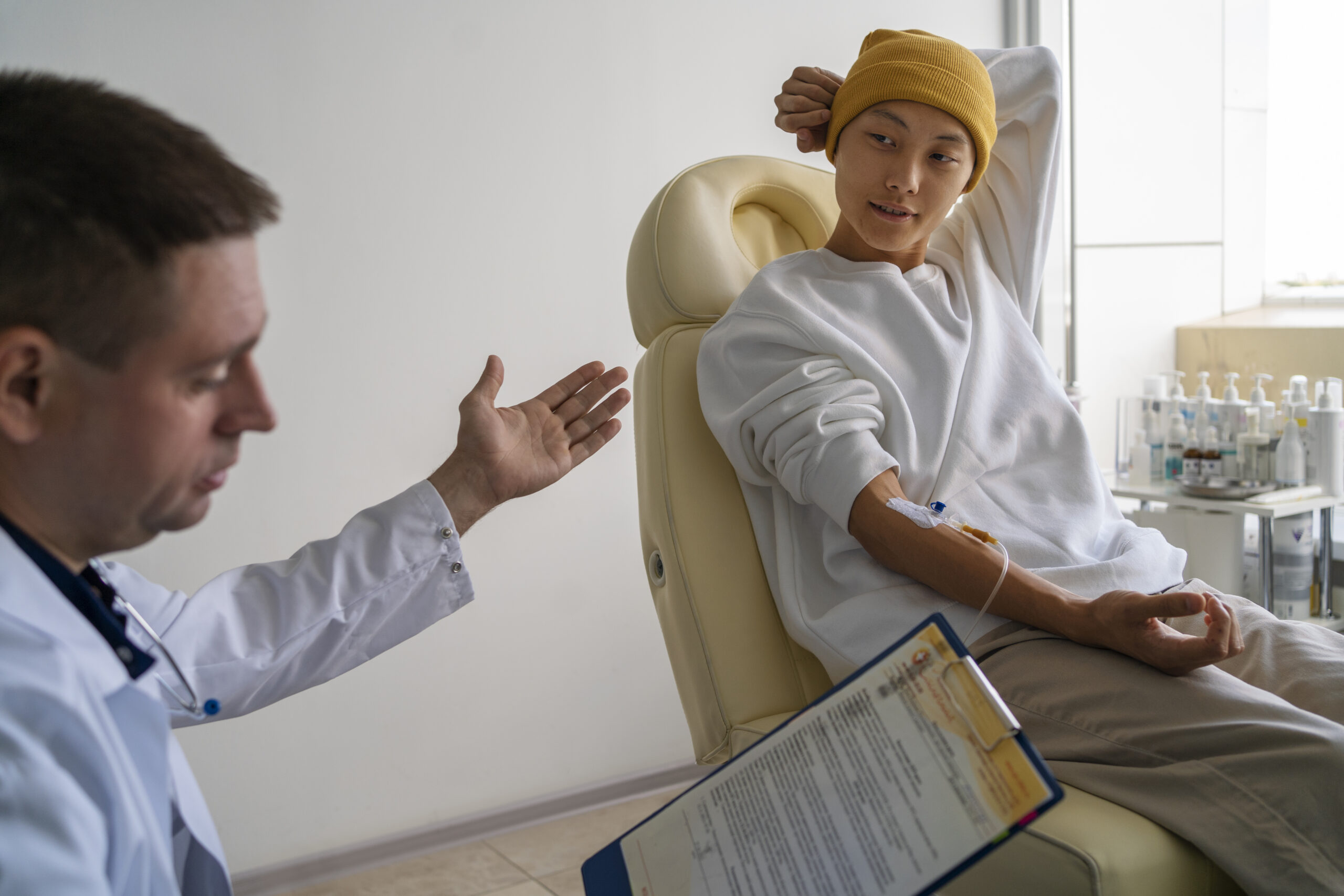
Cancer treatment options can feel overwhelming. Two common choices are chemotherapy and radiation. Chemotherapy uses strong medicines to kill cancer cells throughout the body. In contrast, radiation therapy uses high-energy rays to target and destroy cancer cells in a specific area. Understanding the differences between chemotherapy vs. radiation can help you and your doctor choose the right treatment.
What Is Chemotherapy?
Chemotherapy, often called “chemo,” is a treatment that uses drugs to stop cancer cells from growing. These medicines travel through the bloodstream. As a result, they can reach cancer cells almost anywhere in the body. Doctors may use chemotherapy alone or combine it with other treatments. For example, chemo can shrink tumors before surgery or help destroy any remaining cancer cells afterward.
What Is Radiation Therapy?
Radiation therapy uses beams of energy, like X-rays, to kill cancer cells. Unlike chemotherapy, radiation targets a specific part of the body. Doctors often use machines outside the body to aim the rays. Sometimes, they place a small source of radiation inside the body near the cancer. Radiation can be used alone or with other cancer therapies. It is often chosen when cancer is in one area.
Key Differences Between Chemotherapy and Radiation
Although both treatments fight cancer, they work in different ways. Here are some key differences:
How Doctors Decide on the Right Treatment
Choosing between chemotherapy and radiation depends on several factors. First, doctors look at the type and stage of cancer. Next, they consider your overall health and any other medical conditions. Sometimes, they use both treatments together for better results. In addition, your personal preferences and lifestyle may play a role. Therefore, it is important to talk openly with your care team about your options.
Benefits and Risks of Each Treatment
Both chemotherapy and radiation have benefits and risks. Here are some to consider:
According to the World Health Organization, both treatments are safe when given by trained experts. However, each person reacts differently, so your doctor will help you weigh the pros and cons.
Common Side Effects
Every cancer therapy can cause side effects. However, not everyone will have the same experience. Here are some common side effects for each treatment:
For more details on chemotherapy vs. radiation side effects, ask your healthcare team for information tailored to your treatment plan.
Lifestyle Tips During Treatment
Staying healthy during cancer treatment is important. Here are some tips to help you cope:
Above all, remember that you are not alone. Support groups and counselors can also help you manage stress and emotions.
Prevention and Early Detection
While not all cancers can be prevented, you can lower your risk. For example, avoid tobacco, eat a balanced diet, and stay active. In addition, regular check-ups and screenings can help find cancer early. Early detection often leads to better outcomes. Therefore, talk to your doctor about which screenings are right for you.
In summary, choosing between chemotherapy and radiation depends on many factors. Each treatment has its own benefits and risks. Consult Dr. Kiran Kumar for personalized guidance to determine the best cancer treatment options for your unique needs.