Introduction
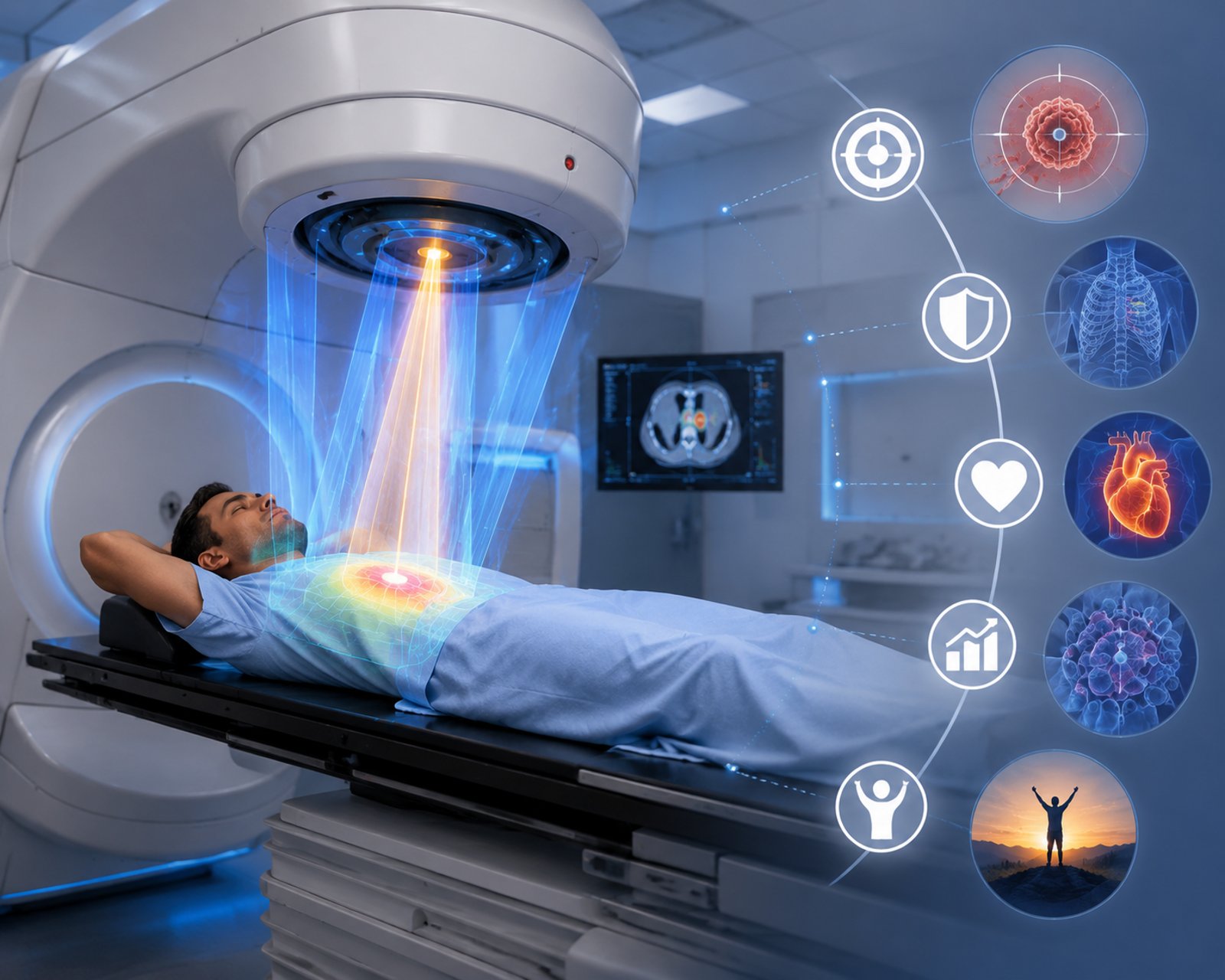
Intensity-Modulated Radiation Therapy (IMRT) is a modern way to treat cancer. It uses advanced technology to target tumors with high accuracy. Because of this, the benefits of IMRT in precise cancer treatment are clear. IMRT helps doctors treat cancer while protecting healthy tissue. As a result, many patients experience fewer side effects and better outcomes. In this blog, we will explain how IMRT works and why it is important for cancer care.
What is IMRT?
IMRT stands for Intensity-Modulated Radiation Therapy. It is a type of advanced radiation therapy for cancer. Unlike older methods, IMRT shapes the radiation beams to match the tumor. This means the treatment can focus more on the cancer and less on healthy areas. Because of this, IMRT is often used for cancers in sensitive parts of the body, such as the head, neck, or prostate.
How IMRT Works in Cancer Treatment
IMRT uses computer-controlled machines to deliver radiation. First, doctors take detailed images of the tumor. Then, they plan the best way to aim the radiation. The machine moves around the patient and sends beams from many angles. Each beam can have a different strength. Therefore, the tumor gets the right dose, while healthy tissue gets less. This careful planning helps make IMRT a precision cancer treatment.
Key Benefits of IMRT for Patients
IMRT offers many advantages for people with cancer. Some of the main IMRT patient benefits include:
For example, IMRT can help protect the mouth and throat in head and neck cancer. As a result, patients may have less trouble eating or speaking.
Comparison: IMRT vs. Traditional Radiation Therapy
Traditional radiation therapy uses simple beams that may affect both cancer and healthy tissue. In contrast, IMRT uses many small beams and shapes them to the tumor. This means IMRT can:
While both methods aim to kill cancer cells, IMRT offers more precision. Therefore, it is often chosen for hard-to-treat or sensitive areas.
Who Can Benefit from IMRT?
Not every cancer patient needs IMRT. However, it is very helpful for people with:
Additionally, IMRT is useful when tumors are close to important organs. Your doctor will decide if IMRT is the best choice for your type of cancer.
Safety and Side Effects
IMRT is a safe and well-tested treatment. Like all radiation therapy, it can cause side effects. However, because IMRT is so precise, side effects are often milder. Common IMRT side effects may include:
Most side effects go away after treatment ends. Still, it is important to talk to your doctor about any concerns. The World Health Organization and leading cancer centers support the use of IMRT for many cancers.
Frequently Asked Questions about IMRT
Conclusion
IMRT is a powerful tool in modern cancer care. Because it targets tumors so precisely, patients often have better results and fewer side effects. If you or a loved one needs radiation therapy, ask your doctor about IMRT. Consult a cancer specialist DR Kiran Kumar to learn if IMRT is right for you.